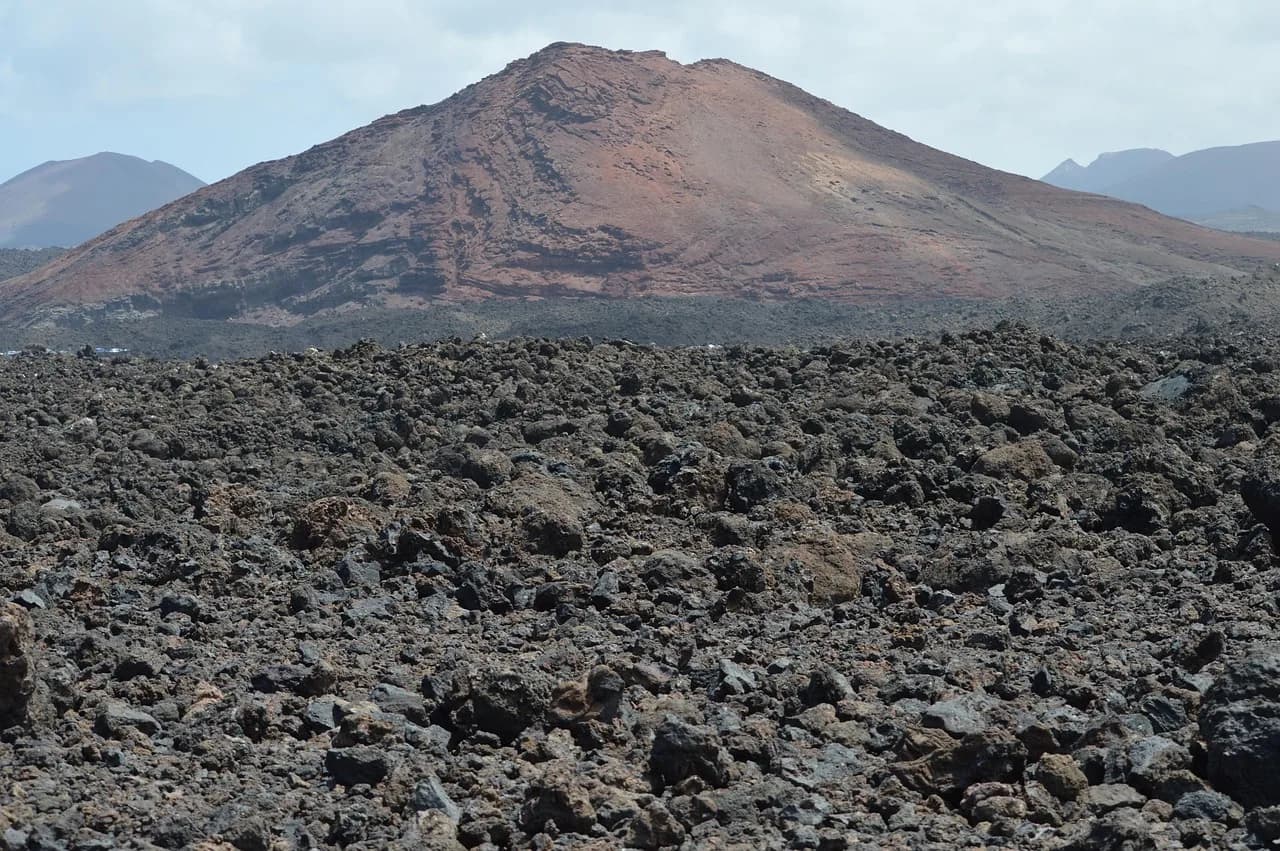
Lanzarote looks like no other island. An eruption that lasted six years, from 1730 to 1736, buried almost a quarter of it in lava, and a local artist, César Manrique, persuaded the island to build low, white and around those volcanoes. The result is an island that has been a Biosphere Reserve since 1993, where the best things aren't on the beach but in the lava: Timanfaya, Jameos del Agua, Cueva de los Verdes and the vineyards of La Geria.
Book the essentials
| Activity | Rating | From |
|---|---|---|
| Timanfaya, Jameos del Agua and Cueva de los Verdes with tickets Book | 4.5★ (2,910) | €89 |
| Full-day tour of the island highlights Book | 4.7★ (3,379) | €51 |
| La Graciosa catamaran cruise with lunch, swimming and kayaks Book | 4.6★ (2,132) | €66 |
| Guided hike among the Timanfaya volcanoes Book | 4.8★ (990) | €47 |
| Kayak and snorkel tour at Papagayo beach Book | 4.7★ (162) | €45 |
| Off-road buggy tour through the volcanic north Book | 4.6★ (5,653) | €150 per buggy |
How many days and when to go
Four or five days cover the essentials without rushing. With three, choose between La Graciosa and a beach day. With a week, add some hikes and an afternoon at Famara or Papagayo.
The weather is good all year. According to AEMET, average highs at the airport range from 20.7 °C in January to 29.1 °C in August, there's about 111 mm of rain a year and nearly 3,000 hours of sunshine. What you'll notice most is the wind: the north-easterly trade wind blows almost daily, strongest in summer, and it feels cool in the north and at sea. Spring and autumn are the best seasons for walking; in July and August, Timanfaya at midday is an oven with no shade.
Timanfaya and the volcanic south
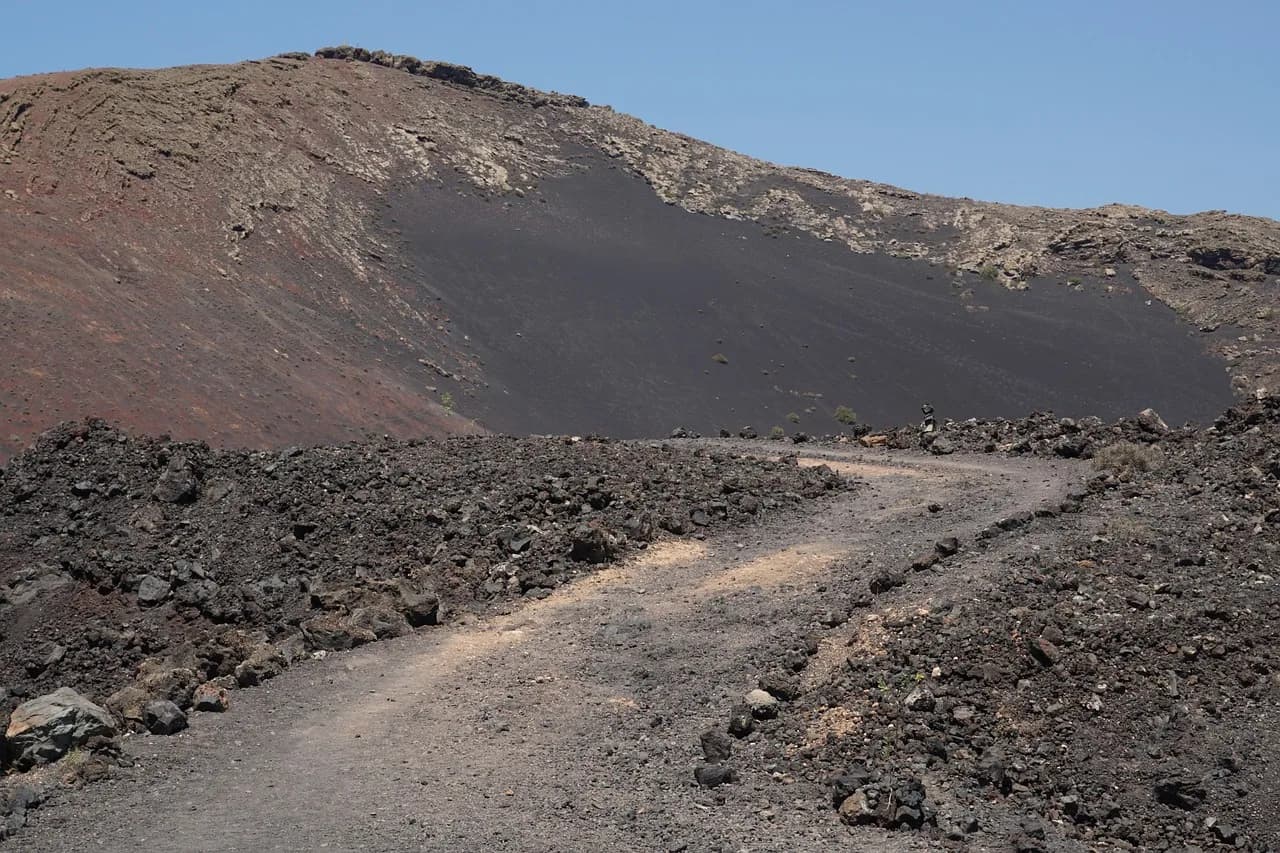
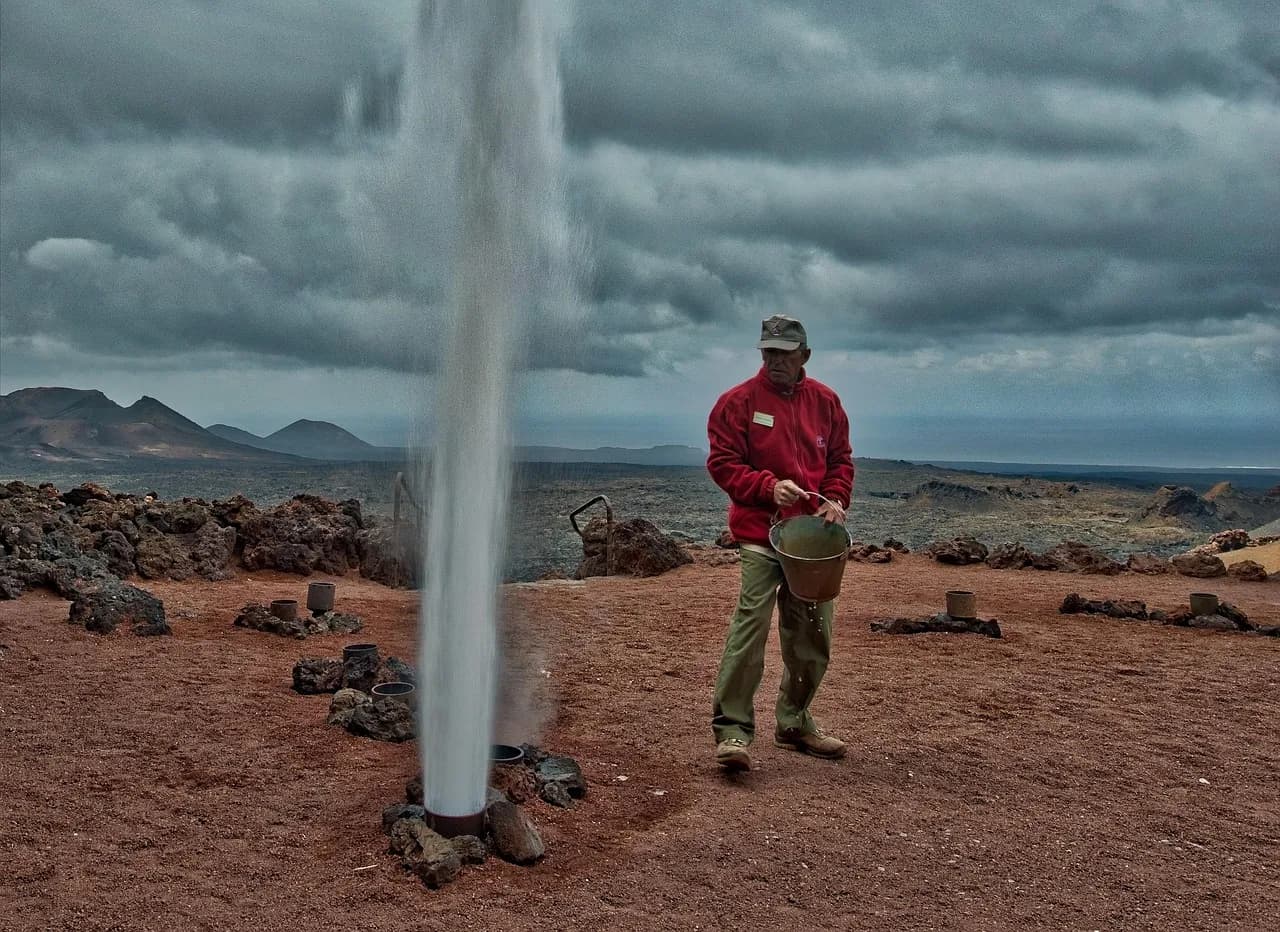
Timanfaya National Park is the one visit you can't skip. The Fire Mountains ticket costs €30 (free up to age 6), is sold online only for a set date and time, and includes the Volcano Route by coach, the only way to tour the inside of the park, plus the geothermal demonstrations at Islote de Hilario. You can drive your own car up to the Islote de Hilario car park, but you can't drive freely around the park. All the practical details are in how to visit Timanfaya.
South of the park, along the LZ-30, lies La Geria: vines planted one by one in ash pits sheltered by stone walls, and wineries where you can taste volcanic Malvasía. On the west coast, El Golfo hides the Charco de los Clicos, a green lagoon beside a black beach; nearby are Los Hervideros, where the sea crashes through lava tunnels, and the Janubio salt pans, best at sunset.
César Manrique's north
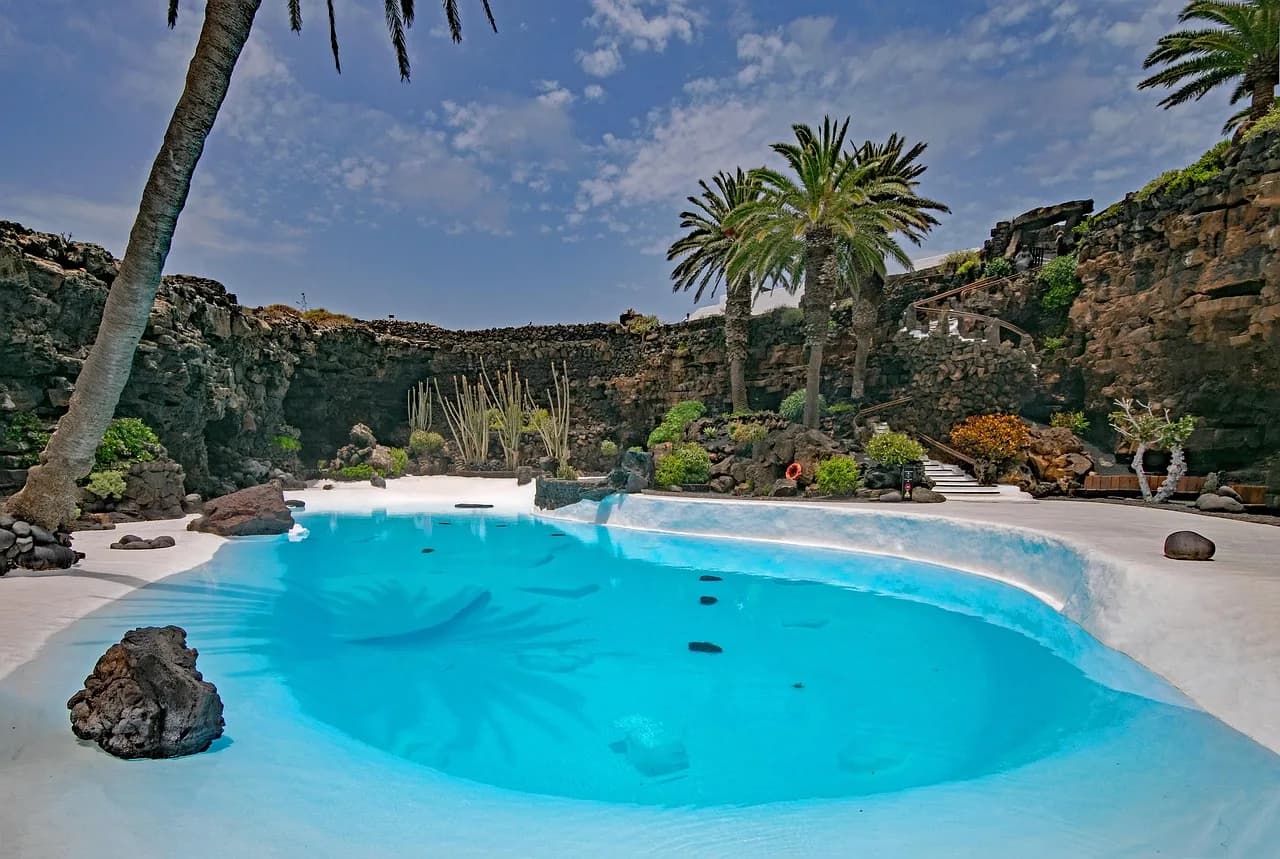
Jameos del Agua (from €17, 10:00 to 18:00, last entry 17:15) is a lava tube turned into a lake, garden, white pool and auditorium; tiny blind crabs live in the lake, and swimming or throwing coins is forbidden. A kilometre away, Cueva de los Verdes (€17, 9:30 to 16:45) is visited with a guide for about 50 minutes through the same lava tube, with stairs and low ceilings. As they're neighbours, combine them: book your Cueva time first and fit the Jameos around it.
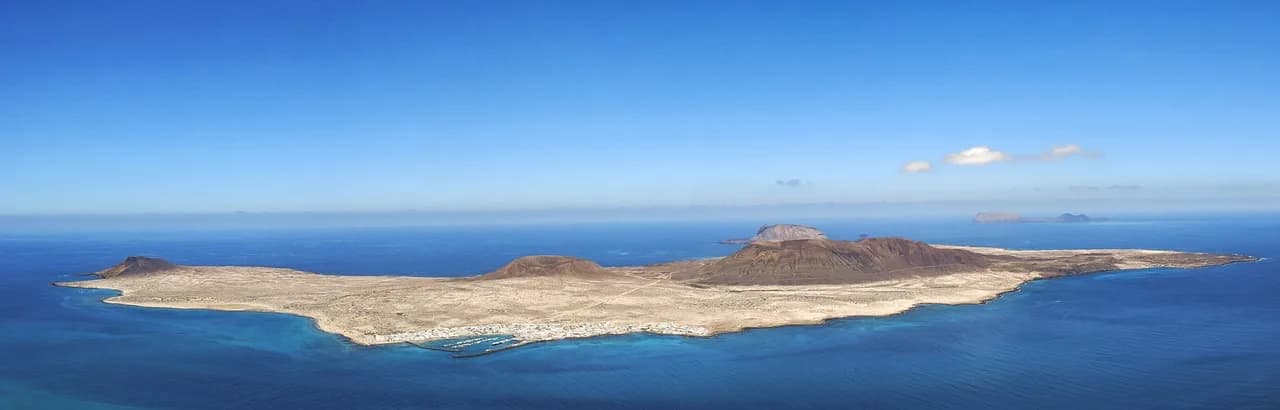
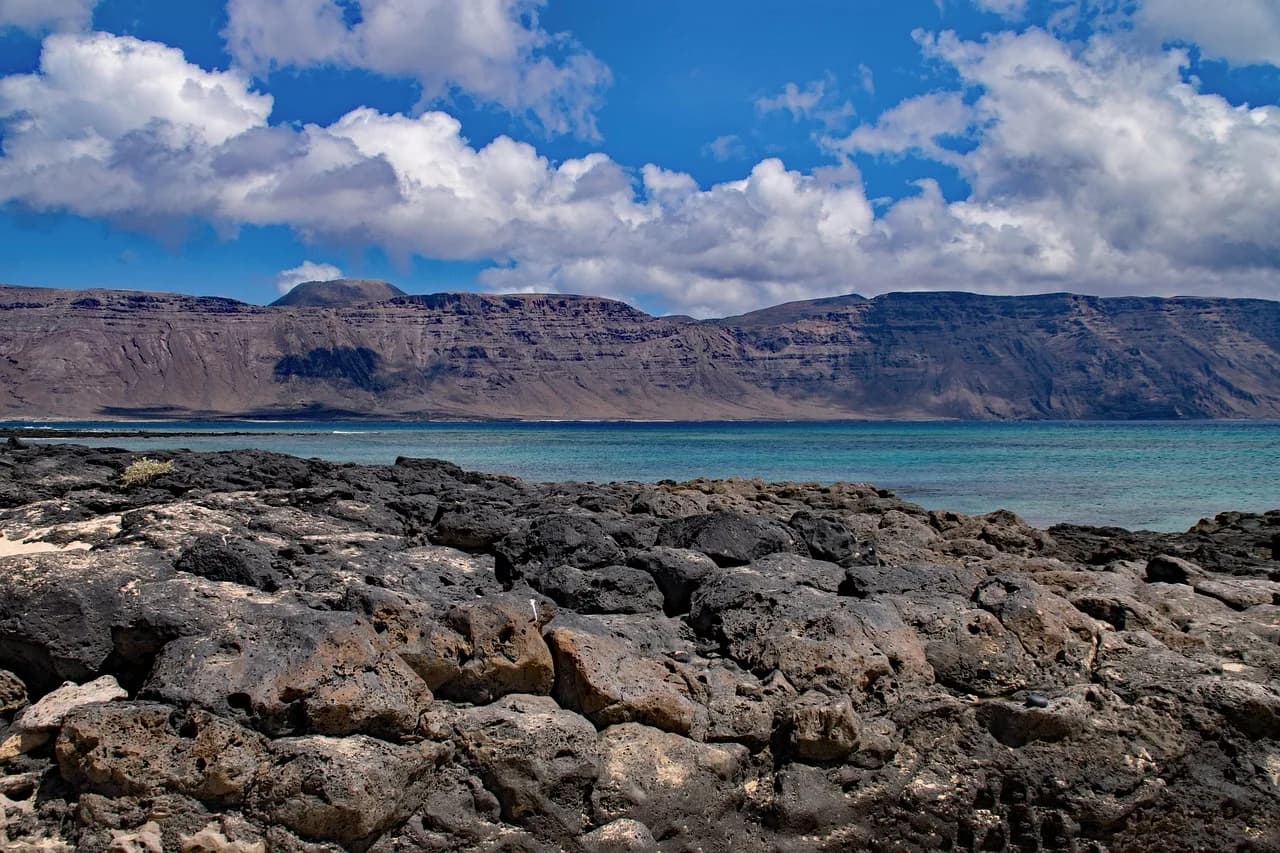
Further up, the Mirador del Río (€9, 10:00 to 17:00) looks out from the Famara cliffs over La Graciosa; pick a clear day. On the way down, Haría, the valley of a thousand palms, with the house-museum where Manrique lived, and the Cactus Garden in Guatiza (€9), his last major work on the island.
The centre: Teguise, the Foundation and Arrecife
Teguise was the island's capital for centuries and keeps its manor houses, churches and white streets; on Sunday mornings it hosts Lanzarote's busiest market, so go another day if you want peace. The César Manrique Foundation in Tahíche is the house the artist built over five lava bubbles (€10; €17 combined with the Haría house-museum). In Arrecife, the Castillo de San José houses the International Museum of Contemporary Art (€5.40), and the Charco de San Ginés is the capital's most pleasant corner.
La Graciosa and the beaches
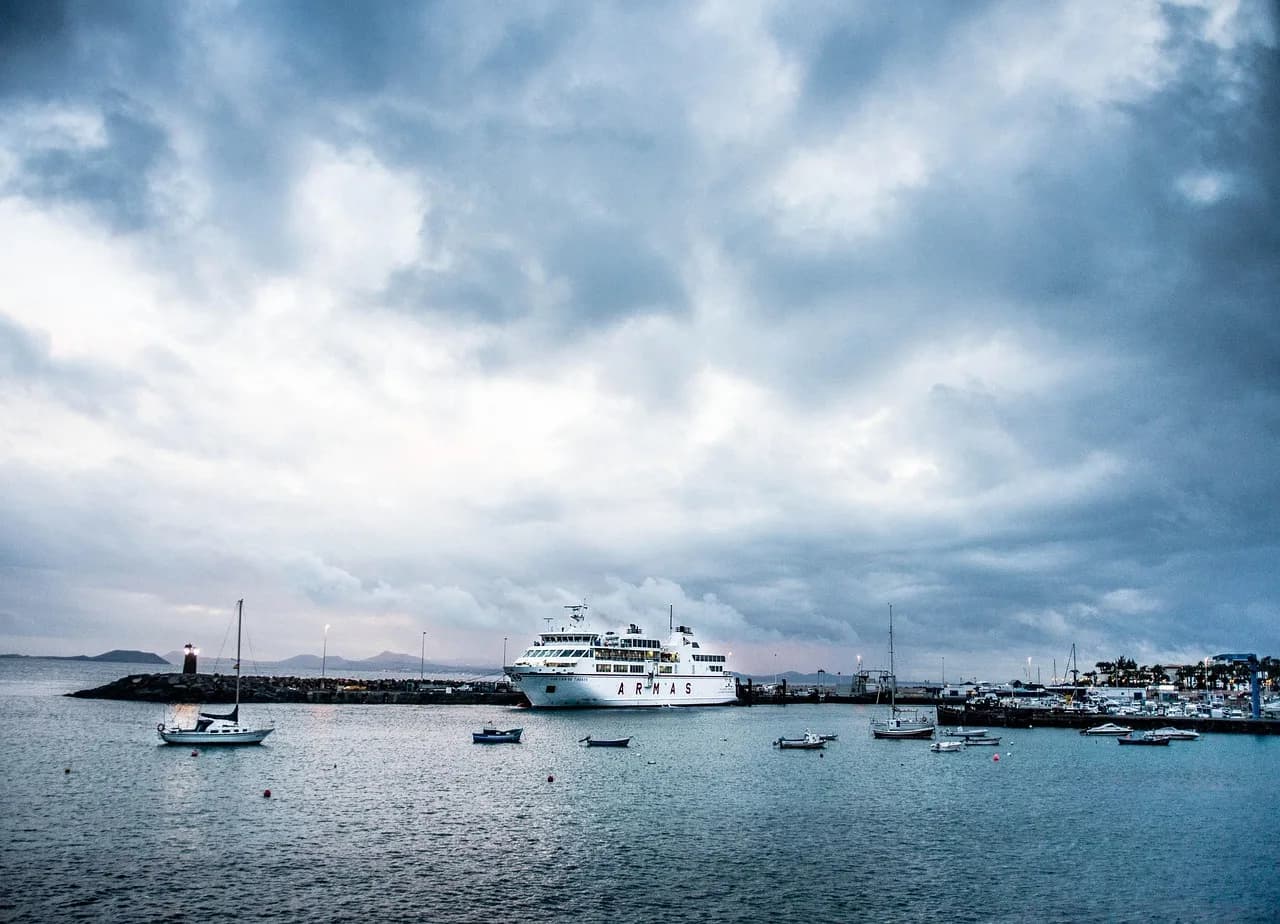
From Órzola, at the northern tip, the ferry takes about 25 minutes to La Graciosa, an island with no tarmac roads where you get around on foot, by bike or by 4x4 taxi. Timetables, fares and beaches are in how to get to La Graciosa.
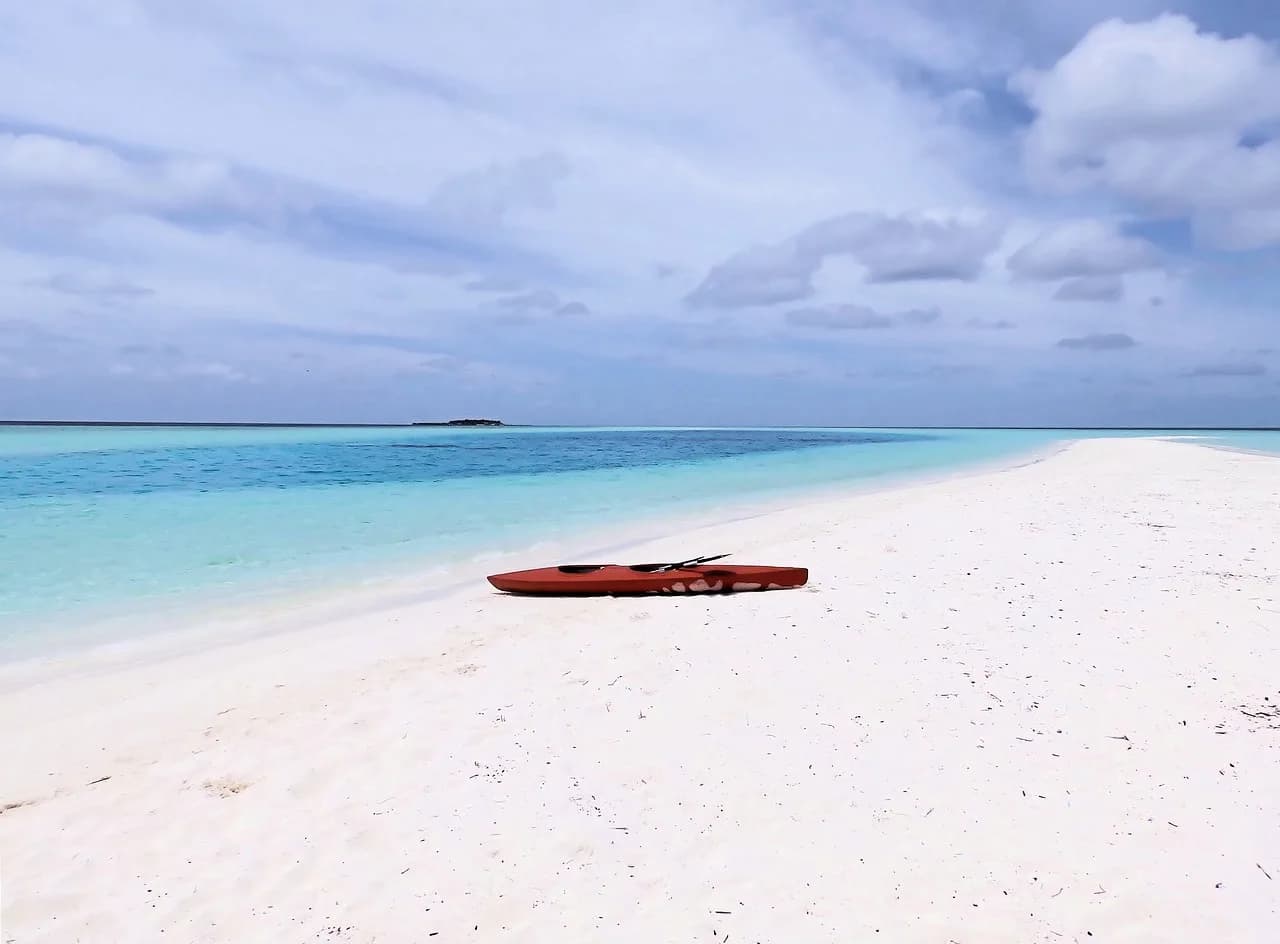
On Lanzarote itself, the best swimming beaches are the Papagayo coves in the south, with golden sand and calm water; you reach them on a dirt track (non-residents pay €3 per car) or by boat from Playa Blanca. Famara, below the cliffs, is stunning for walks and surfing but has strong currents: don't swim under a yellow or red flag. In Puerto del Carmen, Playa Grande is the town beach with the most facilities, and in the north, Caletón Blanco, near Órzola, forms pools of white sand among the lava.
Routes by area
- Volcanic south: Timanfaya first thing, lunch in Yaiza or La Geria, El Golfo, Los Hervideros and the Janubio salt pans at sunset.
- Manrique's north: Cueva de los Verdes at your booked time, Jameos del Agua, Mirador del Río and Haría; back via the Cactus Garden.
- Centre: César Manrique Foundation in the morning, Teguise and the Santa Bárbara castle, afternoon at Famara.
- La Graciosa: first ferry from Órzola, bike to the beaches and back mid-afternoon.
- Papagayo and Playa Blanca: coves in the morning, by boat or kayak, and a free afternoon.
Practical tips
- Car: the easiest option. Arrecife to Órzola is about 35 minutes; Playa Blanca to Timanfaya about 25. Always keep water and sun cream in the car.
- Buses: Arrecife Bus lines link the airport, Arrecife and the resorts, but don't reach Timanfaya and run to Órzola only a few times a day. Check timetables on their website before planning.
- Island council centre tickets (2026): Fire Mountains €30, Cueva de los Verdes €17, Jameos del Agua from €17, Mirador del Río €9, Cactus Garden €9, Castillo de San José €5.40; the Casa Museo del Campesino is free. Under-7s go free. Multi-centre passes no longer exist.
- Booking: for the Fire Mountains and Cueva de los Verdes tickets are sold online only, for a set date and time, with no changes or refunds. In summer and at Easter, buy several days ahead.
- Sun and wind: the wind is deceptive; the sun burns even when you don't feel hot. A cap, high-factor sun cream and a light jacket for the north.
Where to stay
- Puerto del Carmen: the liveliest resort, with a town beach and a central location.
- Playa Blanca: quieter, next to Papagayo and with ferries to Fuerteventura.
- Costa Teguise: close to the airport and Arrecife, with steady wind for windsurfing.
- Rural north and centre: houses and small hotels in Haría, Teguise or La Geria, ideal with a car.
Common mistakes
- Turning up at Timanfaya without a ticket: there's no ticket office, and outside your time slot the ticket isn't valid.
- Swimming at Famara in rough seas: the currents are dangerous.
- Going up to the Mirador del Río on a cloudy day: you'll miss the view of La Graciosa.
- Visiting Teguise at midday on a Sunday without realising: the market fills the streets and car parks.
- Missing the last ferry back from La Graciosa: check the return time before heading to the beaches.
In one sentence
Lanzarote is lava, Manrique and sea: book timed tickets for Timanfaya and Cueva de los Verdes, hire a car and save a day for La Graciosa.